
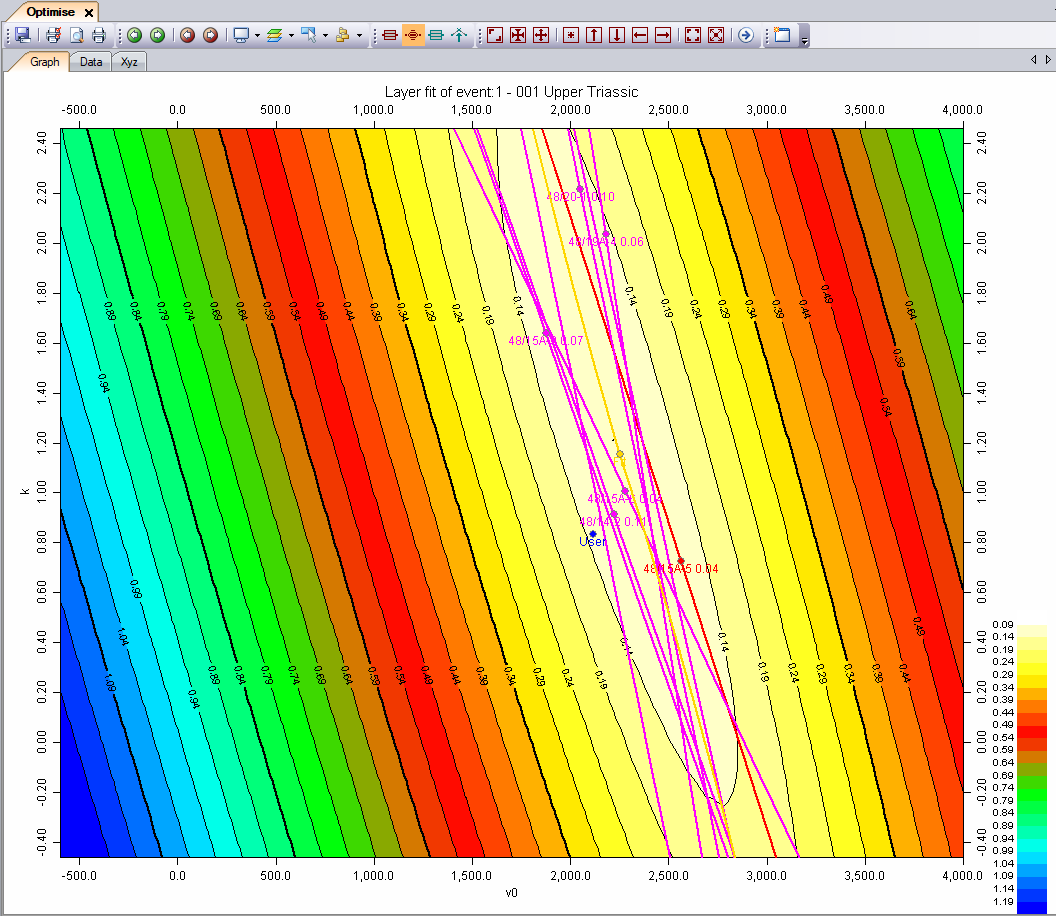
Optimization in Velit depth conversion software is a crucial process that enhances the accuracy and efficiency of subsurface modeling, particularly in the context of oil and gas exploration. Optimization in Velit involves refining depth conversion parameters and models to ensure that the subsurface depth model best represents the true geological structure based on the available data. This process is essential for reducing uncertainties and improving the reliability of the depth-converted seismic data.
Key Aspects of Optimization in Velit
- Objective Function and Parameters:
- The optimization process typically revolves around an objective function, which quantifies the difference between the depth-converted model and observed data, such as well tops or seismic horizons. The goal is to minimize this difference.
- Key parameters that are optimized include velocity models, layer thicknesses, and fault displacements. By adjusting these parameters, Velit seeks to achieve the best fit between the model and the actual data.
- Iterative Workflow:
- Optimization in Velit is often performed iteratively. Initial models are created based on preliminary data and assumptions, and then these models are gradually refined through repeated adjustments and re-calculations.
- Each iteration involves running the depth conversion, comparing the results with well data, and adjusting the model parameters based on the differences observed. This process continues until the model achieves an acceptable level of accuracy.
- Incorporating Multiple Data Sources:
- Velit allows for the integration of various data sources, such as seismic velocities, well logs, and horizon picks, into the optimization process. This multi-data approach ensures that the depth model is consistent with all available information, reducing the risk of relying too heavily on a single data type.
- The software can weigh different data types differently, depending on their reliability or relevance to the specific geological context.
- Velocity Model Calibration:
- A significant part of optimization in Velit involves calibrating the velocity model used for depth conversion. This calibration is done by comparing depth-converted seismic data with well tops, which are depth measurements taken from drilled wells.
- The calibration process adjusts the velocity model to minimize discrepancies between the depth-converted seismic horizons and the well tops, leading to a more accurate depth model.
- Error Analysis and Uncertainty Quantification:
- Velit’s optimization process includes error analysis and uncertainty quantification. By analyzing the residual errors between the model and the observed data, users can identify areas where the model may need further refinement.
- Uncertainty quantification helps in understanding the range of possible outcomes, which is crucial for risk assessment in exploration and development projects.
- Automation and User Control:
- While Velit offers automated optimization routines, it also provides users with significant control over the process. Users can manually adjust parameters, set constraints, and guide the optimization process based on their geological knowledge and expertise.
- This combination of automation and user control ensures that the optimization process is both efficient and adaptable to complex geological scenarios.
Applications of Optimization in Velit
- Improved Depth Conversion Accuracy:
- The primary application of optimization in Velit is to improve the accuracy of depth conversion. Accurate depth conversion is essential for determining the true depth of geological features, which in turn is critical for making informed decisions in exploration and development.
- Enhanced Structural Interpretation:
- By optimizing the depth model, geoscientists can achieve a clearer and more reliable interpretation of subsurface structures, such as faults, folds, and reservoirs. This enhanced structural interpretation supports better exploration and development planning.
- Risk Reduction in Drilling:
- Optimization helps in reducing the risk associated with drilling. By providing a more accurate subsurface model, companies can better plan well trajectories, avoid drilling hazards, and increase the likelihood of hitting the target reservoir.
- Reservoir Characterization:
- In reservoir characterization, optimization in Velit ensures that the depth-converted seismic data accurately represents the subsurface geology. This accuracy is vital for understanding reservoir extent, thickness, and continuity, which are key factors in reservoir management and production planning.
- Economic Decision-Making:
- By reducing uncertainties in the depth model, optimization in Velit supports more informed economic decision-making. Companies can better assess the potential value of a prospect, optimize field development strategies, and manage resources more effectively.